What Is SLA 3D Printing? How Resin Printing Actually Works

Author
Fionn O'Connell

The short definition
SLA (Stereolithography) is a vat photopolymerisation process: a UV light source selectively cures liquid photopolymer resin, layer by layer, until a solid part exists where a digital model used to be. It's one of the oldest 3D printing technologies — the original patent dates to the 1980s — and it remains the benchmark for precision and surface finish among plastic printing processes.
How resin 3D printing actually works
The process breaks down into a fairly mechanical sequence:
The model is sliced into thin horizontal layers, typically 25–100 microns thick, by slicing software that converts a 3D CAD model into a stack of 2D cross-sections.
A build platform sits in or above a vat of liquid resin. Depending on the printer, this is either a laser (true SLA), a projector (DLP), or a masked LCD panel (MSLA) — the light source differs, but the underlying principle is the same.
The light source selectively cures one layer's cross-section, solidifying resin only where the light hits it and leaving the rest liquid.
The build platform shifts by one layer height — moving up, away from a clear film at the bottom of the resin tank, in most desktop and prosumer machines — and fresh liquid resin flows across the just-cured layer.
The process repeats, layer after layer, until the full part exists, still sitting in a bath of mostly uncured resin.
The finished part is removed and washed, typically in an isopropyl alcohol (IPA) bath or a dedicated solvent, to strip away uncured resin clinging to the surface.
The part is post-cured under UV light, often with mild heat, to complete the cross-linking reaction that the printer only partially achieved.
That last step is easy to skip mentally but matters more than most people expect.
Why the post-cure step matters
A part straight off an SLA printer — often called a "green" part — is not fully cured. The resin has solidified enough to hold its shape, but the cross-linking reaction that gives cured photopolymer its real mechanical properties isn't complete. Post-curing under UV (and often heat) finishes that reaction, and the difference is substantial: a properly post-cured part is meaningfully stiffer, stronger, and more heat-resistant than the same part straight off the build plate. This is also the point at which the resin becomes a true thermoset — permanently cross-linked and no longer meltable — which is exactly why heat-set inserts don't work in SLA parts the way they do in FDM thermoplastics.
What SLA is actually good at
Compared to other plastic printing processes, SLA's advantages come down to a few consistent strengths: fine feature resolution (threads, text, small mounting bosses, connector geometry), a smooth out-of-printer surface finish that often needs little to no post-processing, tight dimensional accuracy, and the ability to produce genuinely watertight parts without the layer-line seams FDM parts can develop. Modern engineering resins have also expanded what SLA can do mechanically — tough, impact-resistant, flame-retardant, and high-temperature formulations exist well beyond the brittle, hobbyist-grade resins the process was known for a decade ago.
Common applications
SLA shows up anywhere the combination of precision and surface finish matters more than raw production volume:
Functional prototypes that need to look and fit like the final production part, not just approximate it.
Casting patterns for jewellery and investment casting, where the resin part is burned out to leave a mould cavity rather than becoming the final part itself.
Dental and medical models, where sub-millimetre accuracy is a requirement, not a nice-to-have.
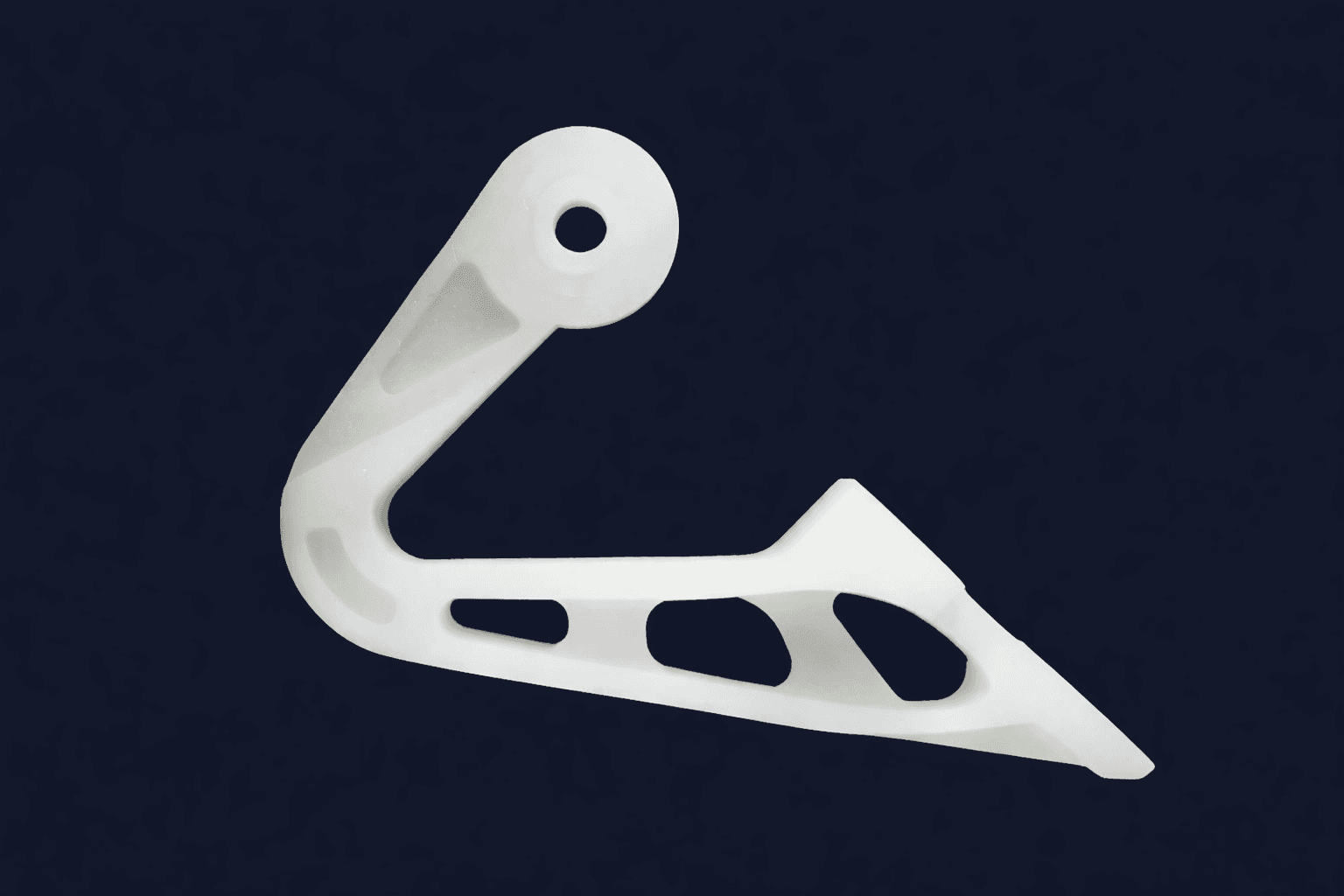
Small precision engineering components — connectors, enclosures, brackets — where fine features and tight tolerances are the whole point of the part.
Where it fits in
SLA isn't the right process for everything — large, low-detail structural parts and anything needing maximum raw impact toughness are often better served by FDM or another process entirely. But for anything where the geometry itself is doing the engineering work — precise fits, fine features, functional prototypes that need to behave like the real thing — it's usually the most direct route from CAD file to physical part.
If you've got a design and aren't sure whether SLA is the right call, that's a quick conversation to have before committing to a print run. We quote every job with transparent, published pricing and no minimum order quantity — head to the homepage whenever you're ready for a quote.