Are 3D Printed Parts Strong Enough for Functional Use?

Author
Fionn O'Connell
Short answer: yes, with the right process and material
The assumption that 3D printed parts are inherently flimsy — fine for a prototype, not for anything that actually has to work — is out of date. Modern engineering-grade materials, in both resin and filament form, routinely match or approach the mechanical properties of the production thermoplastics used in injection moulding. The real question was never "can 3D printing be strong," it's "was this specific part made with the right process, material, and design for what it needs to do" — which is exactly the same question that applies to any manufacturing method.
What "strong enough" actually depends on
There's no single number that answers this, because strength isn't one property. What actually matters depends on the load case a part sees in service:
Static load — does it just need to hold a fixed weight or force without deforming?
Dynamic or fatigue load — does it flex or cycle repeatedly over its life, where even a strong material can fail eventually if the design isn't right?
Impact load — does it need to absorb a sudden shock without shattering, which depends more on toughness than raw tensile strength?
Environment — temperature, chemical exposure, and UV all affect how a material performs over time, independent of its baseline strength on a datasheet.
A part engineered against the wrong one of these will fail regardless of how strong the material is on paper.
The material reality check
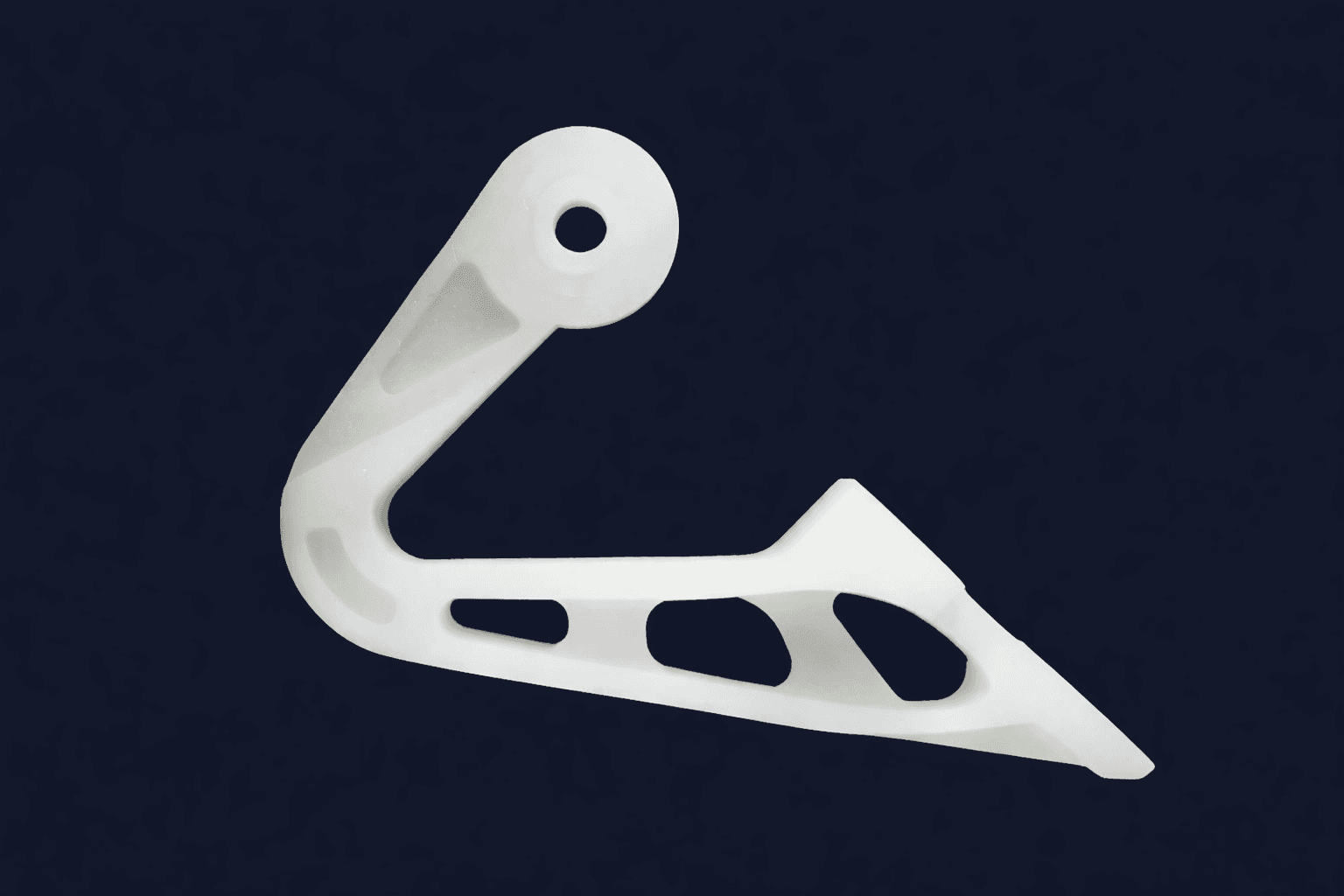
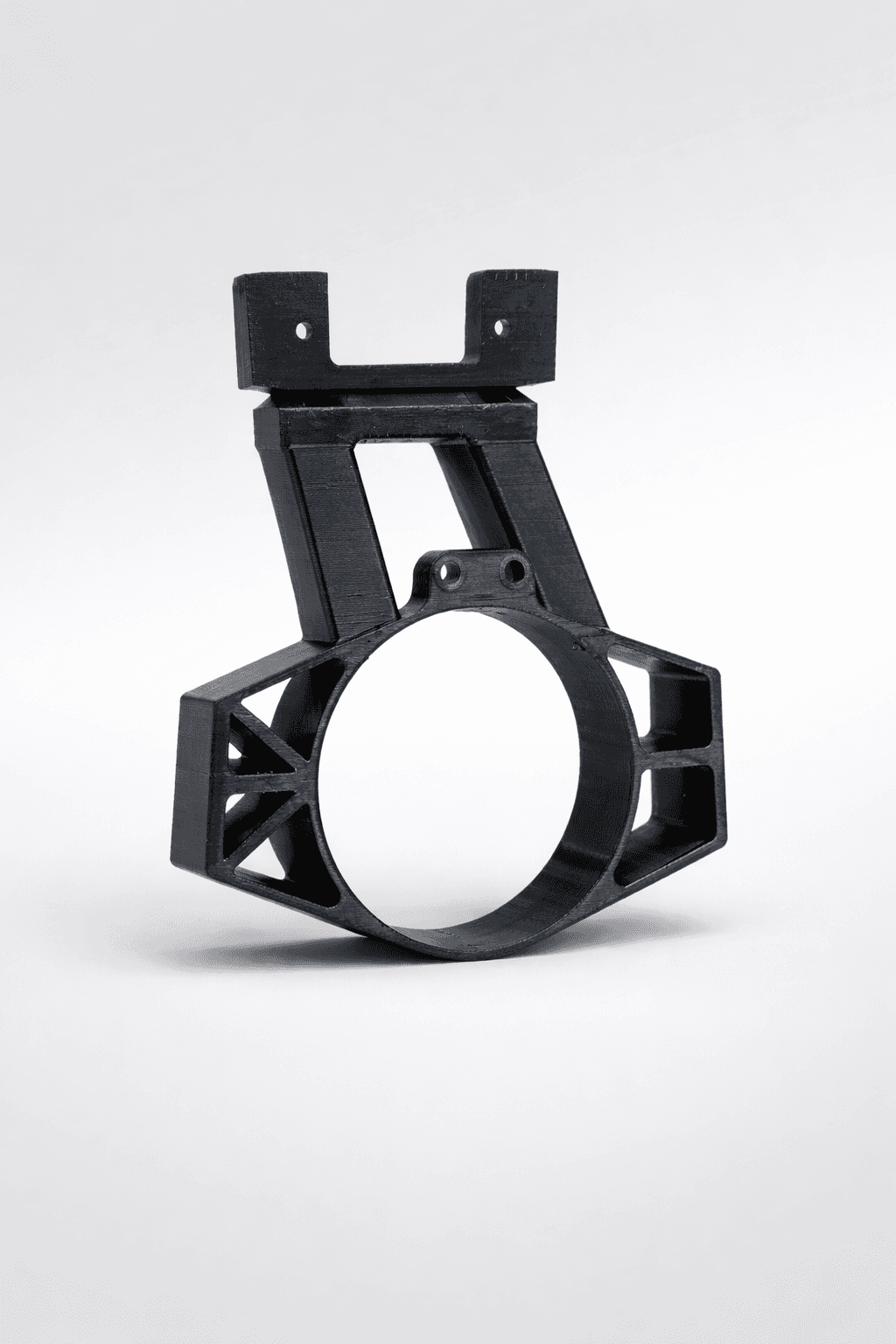
Modern SLA engineering and tough resins routinely reach tensile strengths comparable to ABS, with heat deflection temperatures over 200°C in some high-temperature formulations — genuinely close to production engineering thermoplastics, not the brittle hobbyist resins the process was known for a decade ago. FDM carbon-fibre-reinforced nylon goes further on raw impact toughness and is already standard in real end-use production parts, from drone frames to tooling.
But material choice is only half the equation. Process and design affect strength just as much as the material itself. An FDM part's strength is anisotropic — weaker along its layer lines than within a layer, as we covered when comparing SLA and FDM directly — so build orientation matters as much as material selection. SLA parts are more isotropic once properly post-cured, but an under-cured "green" part is mechanically weaker across the board, not just slightly softer.
Where 3D printed parts are already doing real functional work
This isn't theoretical. We've covered several cases where 3D printed parts are already carrying genuine functional and even flight-critical load:
Threaded inserts bonded into EPP foam UAV fuselages are load-bearing flight hardware on production drones today, not a stand-in for a "real" manufacturing method.
Enclosures rated to UL94 V-0 are a certified, tested classification — not a marketing claim — and SLA parts genuinely hold that rating when made from the right resin.
Investment casting patterns printed in resin become certified aerospace metal parts once cast, contributing directly to flight hardware even though the resin itself doesn't survive the process.
None of these are edge cases dressed up as proof — they're standard, repeatable applications.
When 3D printing isn't the right choice for strength
It's worth being honest about the limits too. Extremely high-cycle fatigue applications, very high sustained structural loads at large physical scale, or anything needing metal-level strength-to-weight in primary structure are usually better served by traditional manufacturing or metal (including metal additive processes, which are a separate technology from resin or filament printing entirely). 3D printing earning a reputation for real functional strength doesn't mean it's the right tool for every load case — it means it's a legitimate option that needs the same engineering judgement as any other manufacturing method.
How to actually get a strong functional part
Getting a genuinely strong 3D printed part comes down to a few consistent things: design for the process (correct wall thickness, fillets to reduce stress concentration, orientation chosen for the actual load path rather than print convenience), pick a material based on the real operating environment rather than whatever's cheapest or fastest to print, make sure post-curing is done properly rather than skipped or rushed, and work with a manufacturer who treats the strength requirement as a design input rather than just printing whatever file arrives.
If you're not sure whether your part's design and material choice will hold up to how it'll actually be used, that's worth talking through before it's printed. We quote every job with transparent, published pricing and no minimum order quantity — head to the homepage whenever you're ready for a quote.